

Blogs
.jpg)
.jpg)
(2).png)
.png)
.png)
(2).png)
THE SCIENCE OF BEAUTY: KEY INGREDIENTS FOR YOUTHFUL, HEALTHY SKIN
Oct 16, 2024.png)
.png)
ALL THESE INGREDIENTS ARE AVAILABLE IN ERA INGREDIENTS & CHEMICAL SDN. BHD. WELCOME TO SEND IN THE INQUIRIES NOW!
Unlocking the Magic of Instant Tea Powder: A Quick Guide
Mar 8, 2024Many of us enjoy starting the day with a cup of tea. Some people enjoy their tea with biscuits, while others prefer toast or scones.

Instant tea powder can be used in various applications beyond just making a traditional cup of tea. Some common applications include:
Note: If you require any additional information or for prototype sample, feel free to reach out to us.


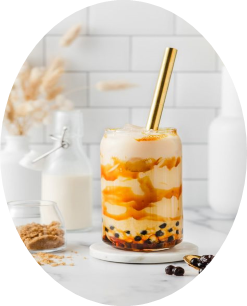

The instant tea powder industry is predicted to expand significantly due to rising consumer demand for convenient and ready-to-drink beverages. Consumers' fast-paced lifestyles and desire for instant pleasure are major drivers of demand for instant tea powder.
Instant tea powder is made from Camellia sinensis leaves. It is a simple and easy-to-use type of tea made by removing tea leaves and drying them into a powder that dissolves fast in hot water. It provides a faster alternative to traditional tea brewing methods while maintaining the same strong flavor profiles and health benefits.
ERA offers a variety of tea powders, each with its own distinct taste and set of benefits. Popular varieties include Instant Tea powder (Tea 001, Tea 002), Green Tea powder, Matcha, Hojicha, and Uji Matcha tea powders. The powdered form makes it easy to include into food recipes and beverages, making it an ideal choice for tea enthusiasts.
Instant tea powder is made from Camellia sinensis leaves. It is a simple and easy-to-use type of tea made by removing tea leaves and drying them into a powder that dissolves fast in hot water. It provides a faster alternative to traditional tea brewing methods while maintaining the same strong flavor profiles and health benefits.
ERA offers a variety of tea powders, each with its own distinct taste and set of benefits. Popular varieties include Instant Tea powder (Tea 001, Tea 002), Green Tea powder, Matcha, Hojicha, and Uji Matcha tea powders. The powdered form makes it easy to include into food recipes and beverages, making it an ideal choice for tea enthusiasts.
| INSTANT TEA POWDER (001) | INSTANT TEA POWDER (002) |
|
|
|
|
|
|
Instant tea powder can be used in various applications beyond just making a traditional cup of tea. Some common applications include:
- Ice Tea: Instant tea powder can be mixed with cold water and served over ice for a refreshing ice tea. (Ex: Ice Lemon Tea)
- Tea Latte: Combine instant tea powder with skimmed milk or milk alternative for a creamy tea latte. (Ex: Oat Milk Tea)
- Smoothies: Add instant tea powder to fruit smoothies for a unique flavor twist and a caffeine boost.
- Baking: Incorporate instant tea powder into baked goods such as cookies, cakes, muffins for a subtle tea flavor.
Note: If you require any additional information or for prototype sample, feel free to reach out to us.
Exploring the Sweet Side of Health: Erythritol as a Food Ingredient
Nov 3, 2023
In modern nutrition, finding alternatives to traditional ingredients has become a  vital mission for health-conscious individuals. One such sweet discovery is erythritol, a sugar substitute that's gaining popularity for its unique properties and potential
health benefits.vital mission for health-conscious individuals. One such sweet discovery is erythritol, a sugar substitute that's gaining popularity for its unique properties and potentialConsumers Trend
The rising prevalence of cardiovascular diseases, obesity, and diabetes, as well as shifting attitudes toward general wellness and fitness trends, are expected to drive erythritol market demand. Low-sugar diabetic foods and sugar-free confectionary are major application areas driving this growth.
Overview
Erythritol is a sugar alcohol used in the food and beverage industry as a sugar substitute to enhance the taste of various food items. It serves as an alternative to sugar and is widely utilized in food processing due to its low-calorie content.
Key Features
- White crystalline powder with a clean, sweet taste that closely resembles sucrose.
- Functional classifications: flavor enhancer, humectant, and sweetener.
| Sweetener | Synonyms | Glycemic Index |
Caloric value (kcal/g) |
Hygroscopicity |
| Sucrose |
Sugar Saccharose |
65 | 3.9 | Medium |
| Erythritol |
Erythrite Meso-erythritol Tetrahydroxybutane |
0 | 0.2 | Very low |
- Organoleptic properties:
(I) Sweetness intensity: Erythritol is 60–80% as sweet as sucrose.

Fig 1: Relative sweetness of polyols (10% aqueous solution)
(II) Sweetness profile: Erythritol has a temporal profile similar to sucrose

Fig. 2 Sweetness profile of erythritol and sucrose (10% sucrose solution and ISO-sweet erythritol solution)
(III) Cooling effect: When dissolved, erythritol exhibits a strong cooling effect owing to its high negative heat of solution.
(VI) Synergy with other sweeteners: Improve mouthfeel and mask certain unwanted aftertastes such as astringency and the irritant effect of intense sweeteners.
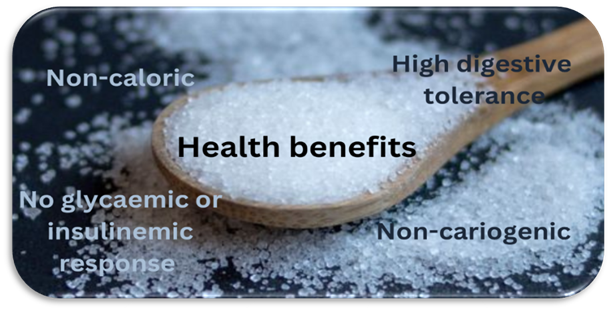
Discovering the benefits of Erythritol
(VI) Synergy with other sweeteners: Improve mouthfeel and mask certain unwanted aftertastes such as astringency and the irritant effect of intense sweeteners.
Discovering the benefits of Erythritol
Application
- Non-alcoholic beverages (Low-calorie carbonated and non-carbonated beverages)
- Fruit-based smoothies and soy-based drinks
- Cakes, cookies and bars
- Yogurt and Ice cream
- Soft candies and hard candies
- Salad dressings, sauces and toppings
Example of market products with Erythritol


- CHI Forest Sparkling Water
- Sunturi Keto Caesar Mayo


The bottom line
While erythritol may not be a high-intensity sweetener, it provides a sweet taste with significantly fewer calories than table sugar, and its minimal impact on blood sugar levels makes it an attractive option for a wide range of dietary needs. In food, erythritol adds bulk and texture; it might just be the sweet solution you've been searching for.
Note:
Our product is made from non-GMO corn (no wheat is used). There are no allergens present in our product.
Understanding Food Preservatives: What You Need to Know
Oct 3, 2023Nowadays, modern food production relies on food preservatives to maintain freshness, safety, and shelf stability. Food preservative is defined by Food Act 1983 as any substance that, when added to food, is capable of inhibiting, retarding, or arresting the process of decomposition, fermentation, or acidification of such food.
Food preservatives used are natural (e.g., salt, sugar, honey, vinegar, citric acid) and synthetic/chemical preservatives (e.g., sulphites, benzoates, sorbates). Food preservatives are classified into several main type based on their mechanisms of action and purposes:
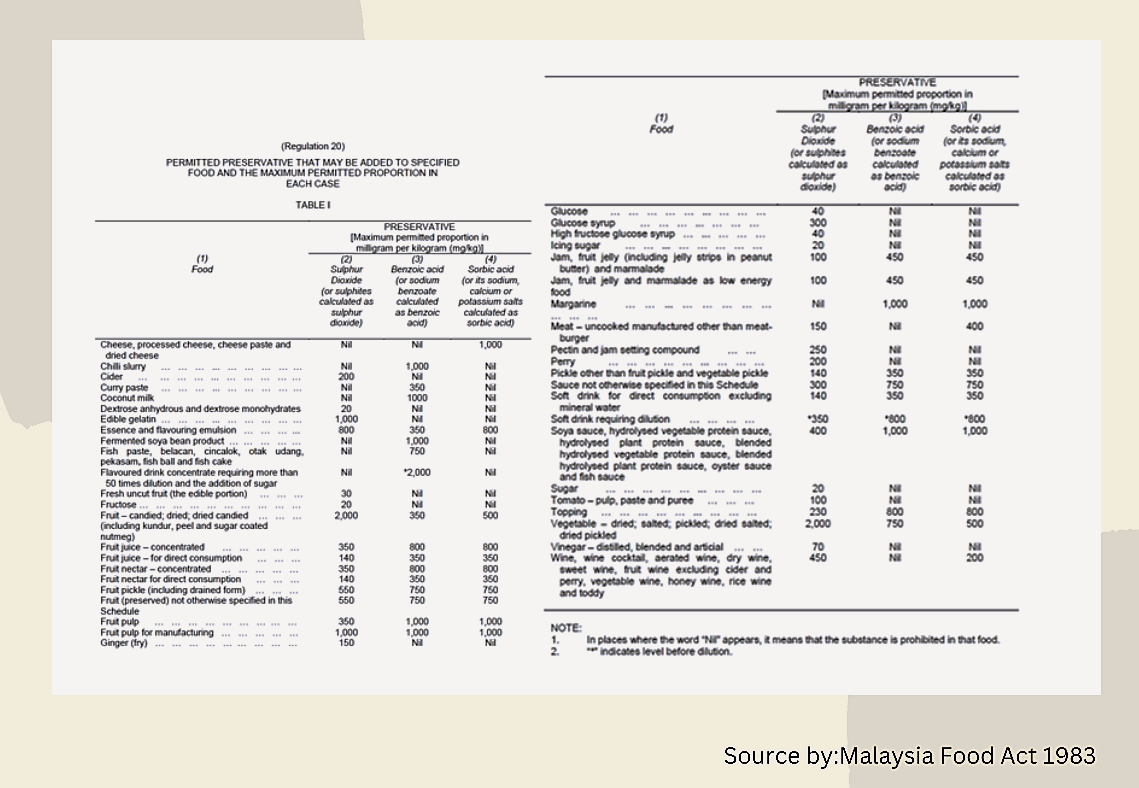
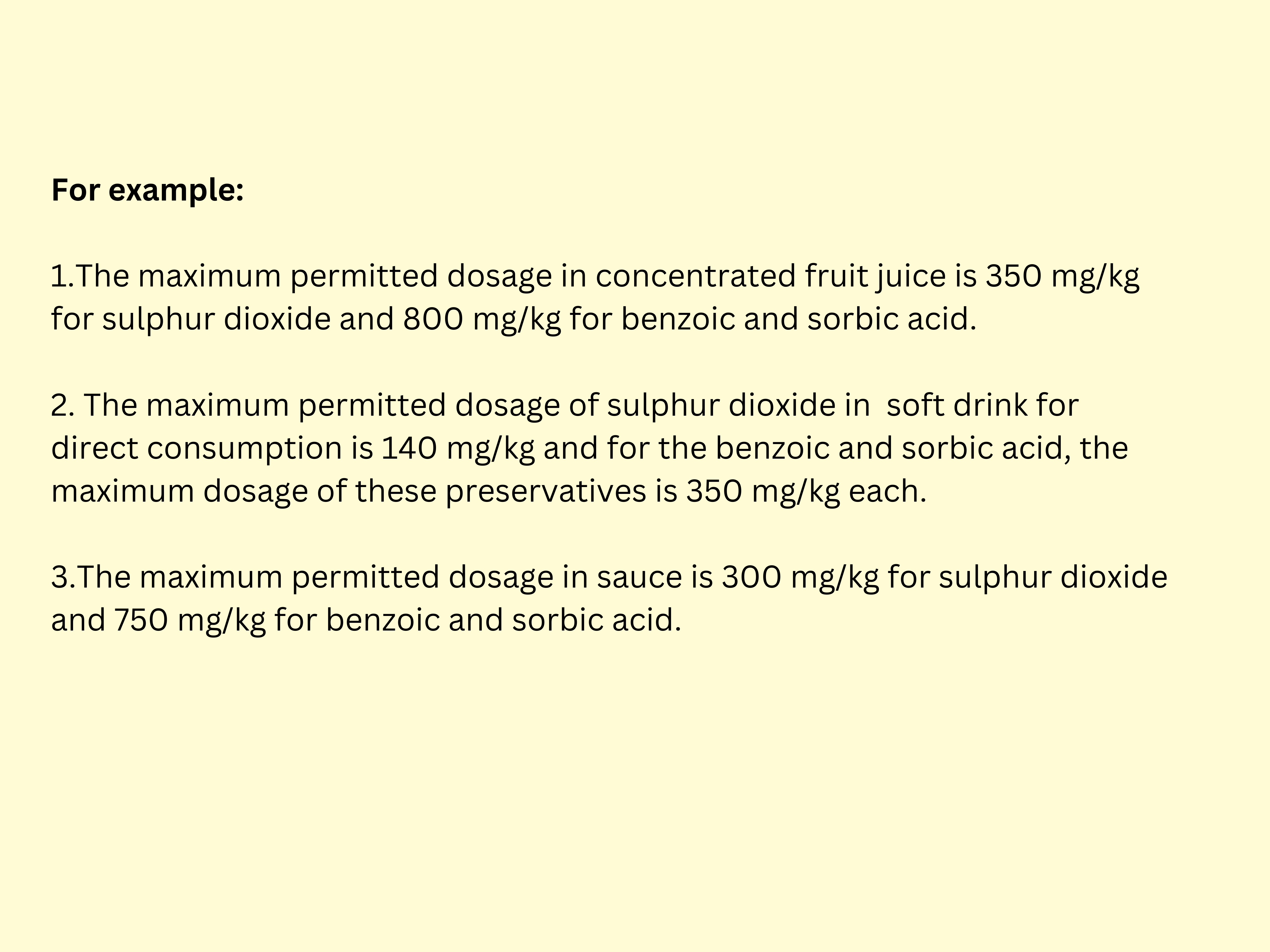
Food preservative dosage varies based on food items and type of preservative. Malaysia's Food Act 1983 outlines permitted preservatives and maximum proportions, as shown below:
It is important to note that while food preservatives offer these benefits, there is a Food Amendment (No.4) Regulation 2020 in Food Act 1983 on how to labelling these preservative on the food packaging to enable consumers to make informed choices regarding foods containing preservatives. Legislation stipulates that additives are labelled by their functional class (preservative, color, antioxidant, etc.) with either their name or INS number in bracket. Regulator continually accesses and monitor the preservative to ensure they are safe for consumption and in acceptable limits.
Food preservatives used are natural (e.g., salt, sugar, honey, vinegar, citric acid) and synthetic/chemical preservatives (e.g., sulphites, benzoates, sorbates). Food preservatives are classified into several main type based on their mechanisms of action and purposes:
| Type of preservatives | Functions | Example |
| Antimicrobial | Inhibit the growth of microorganisms in food products |
-Benzoates (INS 210-INS 213) -Sorbates (INS 200-INS 203) |
| Antioxidants | Prevent or slow down the oxidation of fats and oils, which can lead to rancidity and off-flavors in food products. |
-Ascorbic acid (INS 300) -Tocopherol (INS 307a-INS 307c) |
| Acidulants | Lower the pH of foods, creating an acidic environment that inhibits the growth of microorganisms. |
-Citric Acid (INS 330) -Acetic acid (INS 260) |
| Antimicrobial & Antioxidant | Prevent browning in fruits and vegetables and to inhibit the growth of certain microorganisms | -Sulphites (INS 220-INS 225) |
Food preservative dosage varies based on food items and type of preservative. Malaysia's Food Act 1983 outlines permitted preservatives and maximum proportions, as shown below:
It is important to note that while food preservatives offer these benefits, there is a Food Amendment (No.4) Regulation 2020 in Food Act 1983 on how to labelling these preservative on the food packaging to enable consumers to make informed choices regarding foods containing preservatives. Legislation stipulates that additives are labelled by their functional class (preservative, color, antioxidant, etc.) with either their name or INS number in bracket. Regulator continually accesses and monitor the preservative to ensure they are safe for consumption and in acceptable limits.
Effective Ingredients to be used in athlete energy drinks or slimming product.
Sep 8, 2023
Effective Ingredients to be used in athlete energy drinks or slimming product.
Malaysia's populace has recently become more health conscious. People are more engaged in the physical activities such as badminton, jogging, biking, and so on. This leads to the increment of the demand in the athlete energy drinks and slimming products. Athlete energy drinks swiftly replenish those nutrients and fluids, assisting in the prevention of illnesses and injuries brought on by activity. Furthermore, slimming product is also on the rise as people are paying more attention to their physique shapes.There are 3 highlighted ingredients which are commonly used in athlete energy drinks and slimming products as a fortification:
L-Carnitine
L-Carnitine is a type of nutrient and dietary supplement. It improves the body's conversion of fat to energy. It is renowned for being a fat burner. Additionally, for the proper operation of the heart, brain, muscles, and many other bodily systems, L-carnitine is essential.
Advantages of L-Carnitine:
1) Boost weight loss - It functions by improving the body's capacity to burn fat and convert it into energy.
2) Alleviate muscle ache – It works by boosting the oxygen flow to the muscles and reduce muscular pain after exercise to improve sports performance.
3) Decreasing blood pressure - It aids in lowering blood pressure and the heart disease-related inflammation
Notes: L-Carnitine is often taken 500–2000 mg per day. In the long run, up to 2000 mg (2g) per day appears safe and beneficial.

Hydroxycitric acid (HCA), a substance found in garcinia cambogia, has been investigated for its impact on appetite. HCA-containing garcinia cambogia pills are mostly promoted for weight reduction.
Advantages of Garcinia Camborgia:
1) Increasing Serotonin levels - A deficiency in serotonin has been related to a range of illnesses, including anxiety and depression. Thus, serotonin is a crucial brain signalling chemical.
2) Enhance weight loss – Aids in somewhat decreasing hunger, which resulted in a modest loss of weight during the duration of the trial.
3) Decreasing level of Cholesterol – It works by optimising the body's cholesterol balance which results in weight reduction.
Notes: Garcinia Camborgia is often taken between 300 to 500 mg three times a day with water, half an hour before meals.

Senna Extract
Senna Extract is authorised for use as a laxative to relieve constipation temporarily. Senna is made up of several substances known as sennosides. Sennosides produce irritation to the bowl lining, which has a laxative effect.
Advantages of Senna Extract:
1) Boost the loss in weight - An increase in weight loss capacity has a laxative impact. Senna leaves extract contributes to temporary weight reduction by eliminating excess waste and reducing bloating.
2) Combat constipation – Senna extract includes substances known as sennosides. It directs water back into the stool, which makes it easier to pass, and increases peristalsis, a mechanism that increases motility in the large intestine.
3) Relieves Irritable Bowel Syndrome (IBS) - Encourage contractions by stimulating your colon. The digestive system secretes fluids, which promotes motility.
Notes: Senna extract is often taken by adults at doses of 17.2 mg sennosides, once or twice daily.
Plus-point :Special ideas for energy drinks & slimming products
Besides that, there are some special ideas for the flavours that can be developed in energy drinks, slimming products and even protein drinks:
1) Boba
2) Thai Milk Tea
3) Teh Tarik
4) Matcha
5) Caramel Latte
6) Beetroot / Sakura
7) Dark cocoa.
These are related to the trend of the flavoured drinks in the market nowadays. We have sourced all the relevant ingredients which are able to contribute to the good profiles of all these flavour for your products.
All these ingredients are available at ERA Ingredients & Chemicals Sdn Bhd, welcome to send in inquires now!
Health and Awareness Trends Shaping Food & Beverage Industry
Jul 28, 2023
Health and awareness trends in the food and beverage industry are gaining more attention as consumers become more aware of their daily food intake and its impact on their well-being. Furthermore, Malaysia's obesity rate increased from 14.0% in 2006 to 19.7% in 2019, attributed to imbalanced diets, sugary treats, and supersized portions. Limiting unhealthy food such as reducing consumption of sugar, salt and consuming high-fiber content foods can help prevent this issue.
In this blog, we will explore some key health and awareness trends that have been shaping food and beverage industry:
Trend 1: Low sugar and Low-Calorie Alternatives
Low sugar and low-calorie alternatives surge in popularity due to health concerns about excessive sugar consumption. Natural sweeteners like stevia and monk fruit are being used to lower the added sugar content in food and beverages. Moreover, sugar alcohols such as Erythritol (one of the ERA’s products) offer healthier alternative to regular sugar as they are low calorie sweeteners.
Trend 2: Fortified and functional Products
Functional food and beverage products are gaining popularity due to their enriched nutrients and bioactive compounds. ERA's fiber premix offers a gelatinous, thick, jelly-like texture, making it a key ingredient in diet-friendly fortification, enhancing soups, fruit jellies, and noodles which promises to give satiety feeling.
Trend 3: Plant-based and Vegan Diets
The emergence of plant-based and vegan diets is one of the most significant health trends in the food and beverage industry due to health, ethical concerns, and lactose intolerance. This trend includes whole grains (oats, brown rice, quinoa); nuts (almond, pecan); seeds (chia seeds), beans (white kidney bean) and dairy free milk (oat milk, soy milk, almond milk).
Overall, health and awareness trends indicate consumer preference for healthier and ethical food and beverages choices. As the industry responds to these demands thus it will be leading this industry to innovation and diversification of new products.
Low sugar and low-calorie alternatives surge in popularity due to health concerns about excessive sugar consumption. Natural sweeteners like stevia and monk fruit are being used to lower the added sugar content in food and beverages. Moreover, sugar alcohols such as Erythritol (one of the ERA’s products) offer healthier alternative to regular sugar as they are low calorie sweeteners.
Trend 2: Fortified and functional Products
Functional food and beverage products are gaining popularity due to their enriched nutrients and bioactive compounds. ERA's fiber premix offers a gelatinous, thick, jelly-like texture, making it a key ingredient in diet-friendly fortification, enhancing soups, fruit jellies, and noodles which promises to give satiety feeling.
Trend 3: Plant-based and Vegan Diets
The emergence of plant-based and vegan diets is one of the most significant health trends in the food and beverage industry due to health, ethical concerns, and lactose intolerance. This trend includes whole grains (oats, brown rice, quinoa); nuts (almond, pecan); seeds (chia seeds), beans (white kidney bean) and dairy free milk (oat milk, soy milk, almond milk).
Overall, health and awareness trends indicate consumer preference for healthier and ethical food and beverages choices. As the industry responds to these demands thus it will be leading this industry to innovation and diversification of new products.


Food Application-Cheese Flavor
Jul 15, 2023FOOD APPLICATION- FLAVOR

Flavor is an overall impression combining taste, odor, mouthfeel, and trigeminal perception. Food flavorings are added to a wide range of foods, usually in small amounts to give a particular taste. The pros of flavorings are to impart the characteristic flavor of the flavoring, to augment or modify flavor, and to mask the original flavor. There are three principal types of flavorings used in foods.
| Types | Description |
| Natural flavoring substances | Substances that are extracted from vegetable or animal materials are not further chemically modified or changed. |
| Nature identical flavoring substances | Substances that are chemically identical to natural substances, but which are obtained by chemical processes or by chemical modification of others. |
| Artificial flavoring substances | Substances obtained by chemical synthesis or chemical synthesis or chemical modification of natural substances, but which are not present in natural pods. |
There are 2 types of flavors, sweet flavors such as fruit flavors, beverage flavors, candy flavors, etc., and savory flavors such as meat flavors, seafood flavors, cooked flavors, processed flavors, cheese flavors, etc. This topic would like to discuss about cheese flavor.
CHEESE FLAVOR
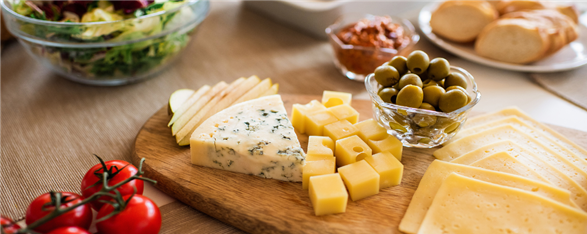
Cheese flavors are unique sensations with aroma, taste, and texture. It is combined with different concentrations and interactions of various compounds. Cheese flavor able help to improve flavor consistency, boost and balance taste profiles and increase the perception of creamy mouthfeel. Varieties of cheese flavors were cream cheese, cottage cheese, mozzarella, parmesan, gouda, feta, cheddar, swiss, fontina, danish (blue cheese), Edam, etc. The dosage of cheese flavor is 0.1-0.2%.
Let’s try our cheese flavors which are available in a variety of forms:
Lastly, flavor plays an important role in our food. You can choose your own flavor according to your desired food. For those of you who are searching more immediately gives you that umami effect, we got a few series of cheese flavors that can apply in different applications with their own sensory attributes. As you can see, it is so an amazing product, we highly recommend it!




Let’s try our cheese flavors which are available in a variety of forms:
| Types of cheese flavor | Description | Application |
|
Mild Taste, Milky, Rich, and Slightly Acidic. | Used in Snacks, Sour Cream, Seasoning, and Sauces. |
|
Umami, Savory, Sharp, Bold, and Tangy. | Used in Grilled Appetizers and Cooking Applications. |
|
More Savory and More Umami. | Used in Cooking Applications. |
|
Sweet, Milky and Rich. | Used in Waffles, Pastries, and Snacks. |
Lastly, flavor plays an important role in our food. You can choose your own flavor according to your desired food. For those of you who are searching more immediately gives you that umami effect, we got a few series of cheese flavors that can apply in different applications with their own sensory attributes. As you can see, it is so an amazing product, we highly recommend it!
Fibre, as your best food companion
Jul 4, 2023
Fibre, as your best food companion

Fibre or dietary fibre has lately gained popularity in both specialty food products and common mass-produced goods. Fiber is commonly found in vegetables, fruits, whole grains, and legumes. It is also sometimes called roughage or bulk. It is an essential nutrient, which means it must be eaten in the diet. The FDA defines high-fibre foods as those that include at least 20% of the recommended daily value (DV) of dietary fibre per serving. Foods with a dietary fibre content of 5% or less are regarded as poor sources.
Dietary fibre comes in two primary varieties:
(a) Soluble Fibre. Water readily dissolves soluble fibre, and in the colon, it transforms into a gel-like material. Oats, peas, beans, apples, citrus fruits, carrots, barley, and psyllium all contain soluble fibre.
(b) Insoluble Fibre. As food travels through the digestive tract, insoluble fibre remains intact because it does not dissolve in water. Insoluble fibre may be found in abundance in whole-wheat products including flour, wheat bran, nuts, beans, and vegetables like potatoes, cauliflower, and green beans.

Applications of Fibre in Food Industry
Dietary fibre can be successfully added to processed meat products as binders, extenders, and fillers. By doing so, they can significantly replace the products' unhealthy fat components and increase acceptability by enhancing their nutritional value, pH, water-holding capacity, emulsion stability, shear press value, sensory characteristics, etc. Furthermore, the functional qualities of meat products can be enhanced by adding fibre content..
Not to forget that the use of dietary fibre in food products can boost the cooking yield and, consequently, the economic benefit. For example, by using our ERA’s products such as wheat fibre, bamboo fibre, oat fibre, apple fibre, and powder cellulose, food processer can yield more than 25% in the reduction of costing and yield better product’s quality.
The utilization of insoluble fibre can be applied to meat, bakery, fish, surimi, vegetarian & vegan products, dairy and condiments. Furthermore, for dietary fibre to be regarded acceptable, it must successfully serve as a food component in the food product to which it is added.
For example, from the research studies done by Polizer et al. (2015) and Statsenko et al. (2021), they drew the conclusion that:
Dietary fibre comes in two primary varieties:
(a) Soluble Fibre. Water readily dissolves soluble fibre, and in the colon, it transforms into a gel-like material. Oats, peas, beans, apples, citrus fruits, carrots, barley, and psyllium all contain soluble fibre.
(b) Insoluble Fibre. As food travels through the digestive tract, insoluble fibre remains intact because it does not dissolve in water. Insoluble fibre may be found in abundance in whole-wheat products including flour, wheat bran, nuts, beans, and vegetables like potatoes, cauliflower, and green beans.
Applications of Fibre in Food Industry
Dietary fibre can be successfully added to processed meat products as binders, extenders, and fillers. By doing so, they can significantly replace the products' unhealthy fat components and increase acceptability by enhancing their nutritional value, pH, water-holding capacity, emulsion stability, shear press value, sensory characteristics, etc. Furthermore, the functional qualities of meat products can be enhanced by adding fibre content..
Not to forget that the use of dietary fibre in food products can boost the cooking yield and, consequently, the economic benefit. For example, by using our ERA’s products such as wheat fibre, bamboo fibre, oat fibre, apple fibre, and powder cellulose, food processer can yield more than 25% in the reduction of costing and yield better product’s quality.
The utilization of insoluble fibre can be applied to meat, bakery, fish, surimi, vegetarian & vegan products, dairy and condiments. Furthermore, for dietary fibre to be regarded acceptable, it must successfully serve as a food component in the food product to which it is added.
For example, from the research studies done by Polizer et al. (2015) and Statsenko et al. (2021), they drew the conclusion that:
- It is feasible to partially substitute meat and fat in chicken nuggets with pea fibre without sacrificing most of their physicochemical properties or their sensory appeal.
- Adding wheat fibre to semi-finished beef products boosts their ability to contain fat and bind moisture while also reducing heat-related losses by 12%.
- By adding Dietary Wheat Fibre to the nugget recipe, you may also increase the consistency and juiciness of the final product,
- Minimise weight loss during frying by 30–40%.
- Avoid the production of big ice crystals during freezing.
- Improve the final product's quality.

What’s the Perfect Fibre?
A publication by Larrauri (1999) in Trends in Food Science & Technology stated that the ''perfect fibre'' should be:
Health Benefits that can be promoted to consumers:
Consuming food products that have been supplemented with dietary fibre can help avoid conditions including obesity, diabetes, irritable bowel syndrome, and coronary heart disease.
A publication by Larrauri (1999) in Trends in Food Science & Technology stated that the ''perfect fibre'' should be:
- Must not contain any nutritionally irritating ingredients.
- Highly concentrated in a little amount to optimise its usage.
- Have an adequate level of bioactive components,
- A balance of soluble and insoluble fibre,
- No taste, unpleasant aroma, colour, or texture affects.
- It must have a lengthy shelf life while also not affecting the meal to which it is being added.
- It ought to be compatible with food processing.
- It should have a favourable customer perception.
Health Benefits that can be promoted to consumers:
Consuming food products that have been supplemented with dietary fibre can help avoid conditions including obesity, diabetes, irritable bowel syndrome, and coronary heart disease.
- For those who consume meat often, this procedure might provide a sizable amount of their daily requirement for dietary fibre.
- Keeps bowel motions normal.
- Protects the health of the bowels.
- Lowers a person's cholesterol.
- Aids in blood sugar regulation.
- Helps one reach a healthy weight.
The Art of Food Colouring: Enhancing Visual Appeal in Foods and Beverages
Jun 15, 2023
Apparently, “We eat with our eyes.” Foods that are off-colour are typically thought to be of lower quality, which is why colours are added. Food colouring, also known as food additives or food dyes, are any substances used to impart or enhance colour to food and includes colouring preparation.
 Food colouring comes in many forms consisting of liquids, powders, and gels. Besides that, food colouring consists of two types: Synthetic (Brilliant Blue FCF, Tartrazine) and Natural (ex: beetroot, turmeric). Synthetic colouring is chemically produced while natural colouring is often extracted from plant, animal, or mineral sources. As a result, synthetic colouring is often more vibrant and stable than natural colouring. This, however, does not affect the taste of your food.
Food colouring can be added to a wide range of food products, including processed foods, beverages, confectionary, baked goods, dairy products, sauces, dressings, and processed foods. Food colouring aids in the production of colourful candies, eye-catching icing, tasty baked goods, attractive beverages, and visually appealing snacks.
Regulation 21 of the Malaysia Food Regulation 1985 stated that the substances listed in Table I and Table II shall be the permitted colouring substances within the meaning and for the purposes of these Regulations and only the substances specified in Table III to the Seven Schedule shall be the permitted diluent. Furthermore, colouring preparations must contain a minimum of 4 per cent of permitted colouring substance. Benzoic acid, which is an approved preservative, may be present in liquid form colouring preparation in amounts not greater than 400 mg/kg, together with acidity regulators, which are a permitted food conditioner. We must double check with the CODEX Standard for Food Additives because the maximum usage level of food colouring depends on the specified products produced.
It is crucial to note that excessive consumption of some synthetic food colouring has been linked to possible health issues, such as hyperactivity in children or allergic reactions in sensitive individuals. Thus nowadays, the demand for natural food colouring options is growing rapidly due to consumer preferences for clean-label products such as fruit and vegetable juices, plant extracts, and other natural colour sources.
By understanding the various types of food coloring, exploring natural alternatives, and considering the regulations associated with their usage, we can elevate the art of food coloring and create visually stunning culinary masterpieces.
